
AI अब सिर्फ जवाब नहीं देता, काम भी करता है!
AI Agents vs Agentic AI की अगर हम बात करें तो आप सोचिए, आप AI से कहते हैं कि किसी विषय पर रिसर्च करो, जरूरी जानकारी इकट्ठा करो, उसका विश्लेषण करो और अंत में एक रिपोर्ट तैयार कर दो।
साधारण AI शायद आपको जानकारी और रिपोर्ट लिखकर दे दे। लेकिन एक ऐसा AI सिस्टम जो अलग-अलग चरणों की योजना बनाए, जरूरी टूल्स का इस्तेमाल करे, जानकारी को जाँचे और फिर काम पूरा करने की कोशिश करे — वह इससे एक कदम आगे है।
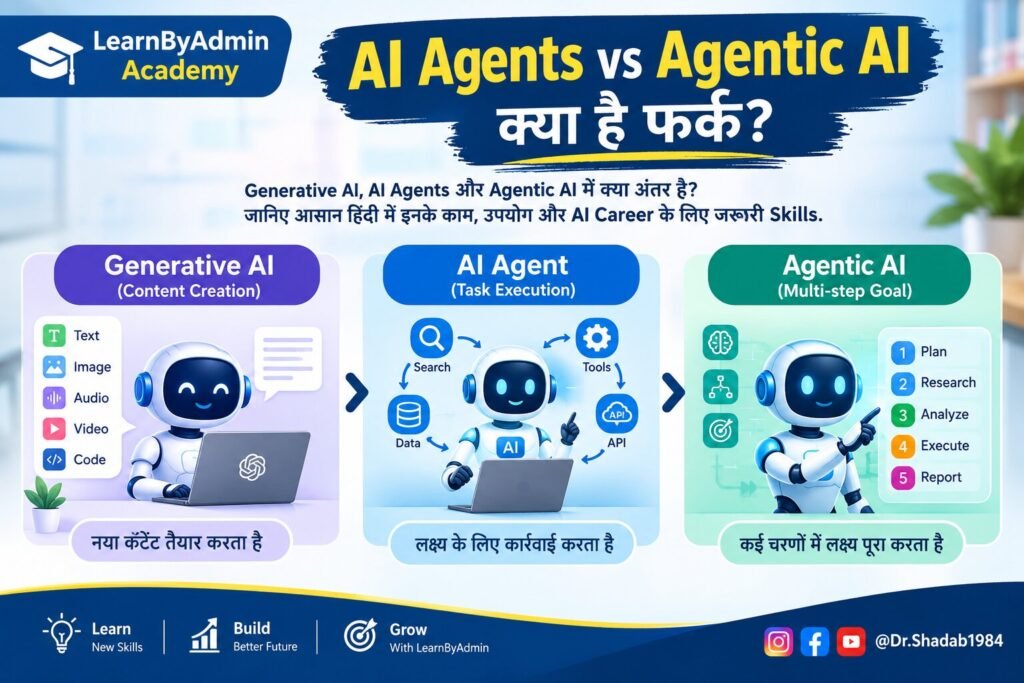
Artificial Intelligence की दुनिया में इसी तरह के बदलाव के साथ AI Agents और Agentic AI जैसे शब्द तेजी से चर्चा में आए हैं।
लेकिन यहाँ एक सवाल उठता है: जब Generative AI, AI Agents और Agentic AI तीनों AI से जुड़े हैं, तो आखिर इनमें अंतर क्या है? क्या ये तीन अलग-अलग टेक्नोलॉजी हैं, या एक-दूसरे से जुड़ी हुई अवधारणाएँ?
आइए, आसान उदाहरणों के साथ समझते हैं।
1. Generative AI क्या है?
Generative AI ऐसी Artificial Intelligence है जो दिए गए इनपुट के आधार पर नया कंटेंट तैयार कर सकती है। यह टेक्स्ट, इमेज, ऑडियो, वीडियो और कोड जैसे अलग-अलग प्रकार के आउटपुट बना सकती है।
उदाहरण के लिए, आप किसी AI टूल से कहें:
- Artificial Intelligence पर एक लेख लिखो।
- Python में एक प्रोग्राम तैयार करो।
- किसी कठिन विषय को आसान भाषा में समझाओ।
- किसी तस्वीर के लिए नया डिजाइन बनाओ।
AI आपके निर्देशों के आधार पर आउटपुट तैयार कर सकता है।
ChatGPT, Google Gemini और Claude जैसे टूल्स Generative AI के लोकप्रिय उदाहरण हैं।
हालाँकि, Generative AI का मतलब केवल टेक्स्ट लिखना नहीं है। इसकी क्षमताएँ इस्तेमाल किए जा रहे मॉडल और टूल्स पर निर्भर करती हैं।
आसान शब्दों में: Generative AI का मुख्य काम कंटेंट या दूसरी नई सामग्री तैयार करना है।
2. AI Agent क्या है?
AI Agent ऐसा सिस्टम है जो किसी निर्धारित लक्ष्य को पूरा करने के लिए अपने वातावरण से जानकारी ले सकता है, निर्णय कर सकता है और उपलब्ध टूल्स या सिस्टम के माध्यम से कार्रवाई कर सकता है।
उदाहरण के लिए, एक AI Agent को किसी ऑनलाइन स्टोर में किसी खास प्रोडक्ट की कीमत और उपलब्धता जाँचने का काम दिया गया।
वह अपने उपलब्ध टूल्स के जरिए प्रोडक्ट खोज सकता है, कीमत प्राप्त कर सकता है और जानकारी को व्यवस्थित करके सामने रख सकता है।
इसी तरह, किसी सॉफ्टवेयर में AI Agent को फाइल पढ़ने, डेटा का विश्लेषण करने या किसी API के जरिए जानकारी प्राप्त करने की क्षमता दी जा सकती है।
एक महत्वपूर्ण बात यह है कि हर AI Agent को अपना AI मॉडल खुद विकसित करने की जरूरत नहीं होती। वह किसी मौजूदा भाषा मॉडल या दूसरे AI मॉडल का इस्तेमाल कर सकता है।
उसकी क्षमताएँ इस बात पर निर्भर करती हैं कि उसे कौन-से टूल्स, निर्देश और अनुमतियाँ दी गई हैं।
आसान शब्दों में: AI Agent सिर्फ जानकारी देने के बजाय किसी लक्ष्य के लिए कार्रवाई भी कर सकता है।
3. Agentic AI क्या है?
Agentic AI उस तरह के AI सिस्टम या व्यवहार को कहा जाता है जिसमें सिस्टम किसी बड़े लक्ष्य को पूरा करने के लिए कई चरणों की योजना बना सकता है, परिस्थितियों के अनुसार अपना अगला कदम चुन सकता है और जरूरत पड़ने पर अलग-अलग टूल्स या Agents के साथ काम कर सकता है।
मान लीजिए, किसी विद्यार्थी को Data Science सीखने के लिए एक व्यवस्थित Study Plan चाहिए।
एक सामान्य Generative AI उसके लिए Study Plan लिख सकता है। वहीं, एक अधिक Agentic सिस्टम को उपयुक्त टूल्स और अनुमतियाँ मिलने पर वह काम कई चरणों में कर सकता है:
- विद्यार्थी के मौजूदा ज्ञान और लक्ष्य की जानकारी लेना।
- जरूरी Topics को क्रम में व्यवस्थित करना।
- उपलब्ध Learning Resources खोजना।
- समय के अनुसार Study Schedule तैयार करना।
- प्रोग्रेस की जानकारी मिलने पर Plan में बदलाव सुझाना।
यह सिर्फ़ एक उदाहरण है। वास्तविक सिस्टम इन सभी कामों को कर पाएगा या नहीं, यह उसकी डिजाइन, टूल्स, डेटा और अनुमतियों पर निर्भर करेगा।
ध्यान रखें कि Agentic AI कोई एक निश्चित सॉफ्टवेयर या मॉडल का नाम नहीं है। यह ऐसे AI सिस्टम की क्षमता और कार्य करने के तरीके को दर्शाने वाला व्यापक शब्द है।
आसान शब्दों में: Agentic AI में लक्ष्य हासिल करने के लिए योजना बनाने, कई चरणों में काम करने और जरूरत के अनुसार कार्रवाई करने पर जोर होता है।
4. Generative AI, AI Agent और Agentic AI में क्या अंतर है?
इन तीनों को समझने का सबसे आसान तरीका उनके मुख्य काम को देखना है।
| आधार | Generative AI | AI Agent | Agentic AI |
|---|---|---|---|
| मुख्य भूमिका | नया कंटेंट तैयार करना | लक्ष्य के लिए कार्रवाई करना | लक्ष्य को कई चरणों में पूरा करना |
| सामान्य उदाहरण | लेख या कोड बनाना | API से डेटा लेकर परिणाम देना | योजना बनाकर कई टूल्स से काम आगे बढ़ाना |
| टूल्स का इस्तेमाल | हो भी सकता है, नहीं भी | अक्सर महत्वपूर्ण होता है | कई टूल्स या Agents का समन्वय हो सकता है |
| योजना बनाना | आवश्यक नहीं | कार्य के अनुसार हो सकता है | आम तौर पर प्रमुख विशेषता |
| स्वतंत्रता | सिस्टम पर निर्भर | दी गई सीमाओं पर निर्भर | दी गई सीमाओं और डिजाइन पर निर्भर |
यह तुलना समझने के लिए एक सरल रूपरेखा है। इन शब्दों की परिभाषाएँ हर तकनीकी संदर्भ में बिल्कुल एक जैसी नहीं होतीं। Generative AI, AI Agent और Agentic AI एक-दूसरे के विरोधी विकल्प नहीं हैं। एक Agent, Generative AI मॉडल का उपयोग कर सकता है और एक Agentic सिस्टम में कई Agents शामिल हो सकते हैं।
5. AI Agents का इस्तेमाल कहाँ हो रहा है?
AI Agents का उपयोग केवल सवालों के जवाब देने तक सीमित नहीं है। सही सिस्टम, डेटा और अनुमतियों के साथ इन्हें कई क्षेत्रों में इस्तेमाल किया जा सकता है।
Education और Learning
AI सिस्टम विद्यार्थियों के सवालों का जवाब देने, Learning Resources खोजने, अभ्यास तैयार करने और सीखने की प्रगति के आधार पर सुझाव देने में मदद कर सकते हैं।
हालाँकि, विद्यार्थियों के मूल्यांकन और महत्वपूर्ण शैक्षणिक निर्णयों में मानवीय निगरानी जरूरी रहती है।
Software Development
AI Agent कोड समझने, संभावित त्रुटियाँ खोजने, टेस्ट तैयार करने और सॉफ्टवेयर डेवलपमेंट के कुछ चरणों में मदद कर सकता है। लेकिन उसके लिखे कोड को जाँचना और सुरक्षित तरीके से चलाना जरूरी है।
Business और Customer Support
ऐसे सिस्टम ग्राहकों के सवालों का जवाब देने, संबंधित जानकारी खोजने, अनुरोधों को वर्गीकृत करने और कुछ नियमित कार्यों को आगे बढ़ाने में उपयोगी हो सकते हैं।
Research और Data Analysis
AI सिस्टम शोध से जुड़ी जानकारी व्यवस्थित करने, डेटा का प्रारंभिक विश्लेषण करने और रिपोर्ट का ड्राफ्ट बनाने में मदद कर सकते हैं। लेकिन स्रोतों की विश्वसनीयता, विश्लेषण की शुद्धता और निष्कर्षों की जाँच इंसान को करनी चाहिए।
6. MCP क्या है और AI Agents में इसकी क्या भूमिका है?
AI Agents के साथ चर्चा में एक और तकनीकी शब्द सुनाई देता है — MCP (Model Context Protocol)।
इसे आसान भाषा में समझें तो MCP एक ऐसा मानक है जो AI एप्लिकेशन को बाहरी टूल्स और डेटा स्रोतों से जुड़ने का व्यवस्थित तरीका उपलब्ध कराता है।
उदाहरण के लिए, किसी AI एप्लिकेशन को फाइलों, डेटाबेस या किसी दूसरे समर्थित सिस्टम से जानकारी लेनी हो, तो MCP उसके लिए कनेक्शन स्थापित करने में मदद कर सकता है।
लेकिन MCP अपने आप AI को बुद्धिमान नहीं बनाता और न ही यह किसी Agent को हर काम की अनुमति देता है। कौन-सा डेटा उपलब्ध होगा और कौन-सी कार्रवाई की जा सकेगी, यह संबंधित सिस्टम की सेटिंग्स और अनुमतियों पर निर्भर करता है।
MCP के बारे में अधिक जानने के लिए इसकी आधिकारिक वेबसाइट देखी जा सकती है।
7. AI Agents के साथ कौन-से जोखिम जुड़े हैं?
AI Agents उपयोगी हैं, लेकिन इन्हें बिना जाँच के हर काम सौंप देना सही नहीं है।
कुछ प्रमुख जोखिम हैं:
- गलत जानकारी: AI गलत निष्कर्ष निकाल सकता है या गलत डेटा पर कार्रवाई कर सकता है।
- Privacy: संवेदनशील जानकारी गलत तरीके से इस्तेमाल या साझा हो सकती है।
- Security: बाहरी निर्देशों या दुर्भावनापूर्ण सामग्री के कारण सिस्टम से गलत काम करवाने की कोशिश की जा सकती है।
- अनावश्यक कार्रवाई: ज्यादा अनुमतियाँ मिलने पर Agent ऐसी कार्रवाई कर सकता है जिसकी जरूरत नहीं थी।
- मानवीय निगरानी की कमी: महत्वपूर्ण फैसलों को पूरी तरह AI पर छोड़ना नुकसानदेह हो सकता है।
इसीलिए अच्छे AI सिस्टम में सीमित अनुमतियाँ, परीक्षण, लॉगिंग, सुरक्षा जाँच और जरूरी मामलों में इंसान की मंजूरी जैसे उपाय महत्वपूर्ण हैं।
उदाहरण के लिए, AI किसी ईमेल का ड्राफ्ट तैयार कर सकता है, लेकिन बिना अनुमति के उसे भेजना हमेशा उचित नहीं होगा। इसी तरह, किसी फाइल को पढ़ने और उसे स्थायी रूप से डिलीट करने की अनुमति एक जैसी नहीं होनी चाहिए।
8. AI Career के लिए क्या सीखना चाहिए?
अगर आप AI के क्षेत्र में अपना करियर बनाना चाहते हैं, तो शुरुआत सीधे जटिल AI Agents बनाने से करना जरूरी नहीं है। पहले मजबूत बुनियाद तैयार करना अधिक उपयोगी होगा।
Step 1: Programming सीखें
Python से शुरुआत करें। Variables, Conditions, Loops, Functions, Data Structures और Object-Oriented Programming की समझ विकसित करें।
Step 2: Data के साथ काम करना सीखें
NumPy, Pandas और Data Visualization की मदद से डेटा पढ़ना, साफ करना और उसका विश्लेषण करना सीखें।
Step 3: Machine Learning की बुनियाद समझें
Training और Testing, Classification, Regression, Model Evaluation और Overfitting जैसे Concepts पर काम करें।
Step 4: Generative AI और LLMs समझें
Large Language Models, Prompting, Tokens, Context Window और Model Limitations जैसे विषयों को समझें।
Step 5: APIs और Tool Calling सीखें
जानें कि AI मॉडल को बाहरी सेवाओं और टूल्स से कैसे जोड़ा जाता है। JSON और API की बुनियादी समझ भी जरूरी है।
Step 6: AI Agents और RAG पर छोटे प्रोजेक्ट बनाएँ
ऐसे प्रोजेक्ट तैयार करें जिनमें AI किसी निर्धारित कार्य के लिए जानकारी खोजे, टूल का इस्तेमाल करे और परिणाम दे। RAG यानी Retrieval-Augmented Generation के जरिए बाहरी दस्तावेजों से संबंधित जानकारी प्राप्त करने का तरीका भी सीखें।
Step 7: Testing, Security और Deployment पर ध्यान दें
केवल ऐसा सिस्टम बनाना काफी नहीं है जो एक बार सही काम कर दे। यह भी जाँचना जरूरी है कि वह अलग-अलग परिस्थितियों में कितना विश्वसनीय, सुरक्षित और उपयोगी है।
AI Engineering में रुचि रखने वाले शुरुआती विद्यार्थियों के लिए AI Engineer बनने का रोडमैप उपयोगी अगला कदम हो सकता है।
अगर आप AI, Machine Learning और Data Science के बीच अंतर समझना चाहते हैं, तो यह लेख भी पढ़ें: Data Science vs Machine Learning vs AI।
यह भी पढ़ें: Data Science vs Machine Learning vs AI
Generative AI, AI Agents और Agentic AI को समझने का सबसे आसान तरीका यह है कि इनका फोकस अलग-अलग हो सकता है: कंटेंट बनाना, लक्ष्य के लिए कार्रवाई करना और कई चरणों में काम को आगे बढ़ाना।
आने वाले समय में ऐसे AI सिस्टम महत्वपूर्ण हो सकते हैं जो केवल जानकारी देने के बजाय वास्तविक कार्यों में भी सहायता करें। लेकिन बेहतर AI बनाने के लिए सिर्फ नए टूल्स जानना काफी नहीं है। Programming, Data, Machine Learning, Security और सही परिणामों की जाँच करने की क्षमता भी जरूरी है।
याद रखिए, AI को इस्तेमाल करना एक Skill है, लेकिन AI को समझकर उपयोगी, भरोसेमंद और सुरक्षित सिस्टम बनाना एक अलग स्तर की क्षमता है।
आप सभी को अपने Learning और Career के सफर के लिए मेरी तरफ से ढेर सारी शुभकामनाएँ। AI, Machine Learning या Data Science से जुड़ी और जानकारी के लिए LearnByAdmin से जुड़े रहिए।
I am trying to design a practice session that helps me notice pacing problems before making a booking. Dividing the available time by a question count gives an average, but it does not tell me how to handle questions that take much longer than others. I want a rehearsal that reveals those differences. I would confirm the current format. My notes should track elapsed time. Some items deserve a closer look. My background reading began with [url=https://realestatelicensetest.top]how many questions are on the real estate exam[/url] and raised several questions worth checking directly. Reading again sometimes takes extra time. The average may conceal uneven progress. The plan should allow for review. One rehearsal offers only limited evidence. I would check the current candidate information before using any figures from a general article. For the rehearsal itself, I want a record of where I paused and why, rather than only a final completion time. That would give me something specific to adjust in the next session. What pacing details would you record?
My first stop was the most recent case action before digging through the rest. A case that is closed points to a different procedural issue, so I kept each status in its own category. I left [url=https://injuryclaimclarity.com/how-to-reopen-a-case-marked-closed-by-direction/]the Injury Claim Clarity guide[/url] with the Board-action notes so I could find the right procedural route again. I then checked what came just before the last entry. For a review problem, I first separated the filing issue from the merits of the claim. For a case no longer set for hearing, I then asked whether restoration was needed. Only after that did I connect the procedural filing to the reason the case needed action again. A disease or gradual-condition case needs work-history evidence, because the work connection may come from repeated exposure. A later change in restrictions can become a reopening fact when it is tied to new medical evidence. Whether someone uses a lawyer is different from why the review request was denied. The whole file came down to one clear sequence: status, reason, new fact, then the procedural step.
I volunteer with an adult learning group, and someone has asked for help reading assessment instructions more carefully. I can support general reading practice, but I do not want to imply that I know an agency’s current examination content. We need a limited and useful plan for the session. I would start with instruction verbs. I would ask for a paraphrase. The learner needs time to reflect. A phrase I used to find background material was [url=https://policeexamquestions.top]pellet b practice test free[/url] and I am using it as a starting point for further questions. My prompts must avoid revealing answers. Examples can use ordinary everyday topics. I would describe the reading obstacle. Official information needs a separate check. I would like the learner to leave able to describe a repeatable reading process in their own words. That seems more useful than remembering the answer to a single example. Any questions about assessment rules or permitted support should go to the responsible organisation before making arrangements. How would you keep feedback useful?
For an upcoming paper mask workshop, I want the planning stage to account for the different outlines of participants’ faces. Starting with a single outline saves time, yet it leaves us guessing about where each person might need a different contour. I am considering a short explanation of [url=https://squarefaceshape.top]face shapes[/url] as background for that worksheet. I would keep this separate from actual measurements, because a category cannot tell us whether the paper piece will sit comfortably. I am thinking of adding a small outline sketch where people can mark width and jaw contours before choosing a template. The paper versions will be tested before decoration, leaving time to change the edges without wasting paint or other materials. The worksheet needs an option for a mixed outline, since forcing a single category would add confusion to the practical task. The finished design can still be exaggerated for a character; the preliminary notes are simply there to guide the first fitting. Has anyone used a similar worksheet, and which observations were most helpful before moving from an outline to a wearable template?